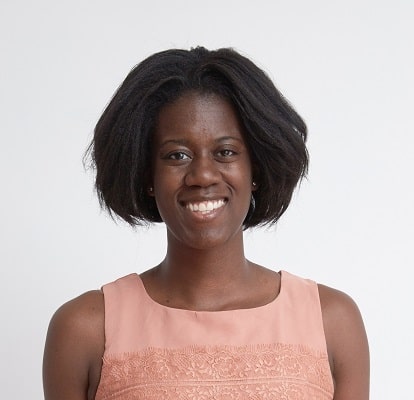
Day in the life of
Licensed Clinical Social Worker – Vicky Woodruff

I am a Licensed Clinical Social Worker, LCSW-C. With a master’s degree in social work, I was able to take my degree in a number of different directions. I chose to concentrate on mental health. I worked towards my clinical license and started my own private practice, Woodruff Counseling LLC.
My typical day
I function as a therapist. I see individual clients for one hour sessions to explore issues such as anxiety, depression, bipolar, and more. The nice part about owning my business is that I am able to set my own hours. I find the work interesting and I enjoy meeting and interacting with a wide variety of people. Somedays the job can be stressful. I often am with people during some of the hardest times of their lives.
Pros
It may sound cliché but I believe that the work is important. I know that when I intervene and provide individuals with the support they need I can have a positive impact in their lives. The best part of my job is when someone no longer needs me. As I reflect back on how far a patient has come and see the progress that they have made it brings me satisfaction like nothing else.
Cons
The hardest part of the job is the emotional toll. It can be draining to be present, open, and empathetic for such extended periods of time. Especially, when you consider that over the course of your career you are bound to face some personal struggles. The other challenging part if you choose to practice independently can be the isolation. I have found that it is important to network with other providers so that I can talk about my experiences and challenges as a clinician.
Advice for students interested in this career path
Social work is a broad field. You could be working in a healthcare setting, school, helping to run a non-profit, community planning, just to name a few. Because social work is such a broad field the classes that you choose to take helps to define what type of work you will be doing down the road. I knew that I wanted to work in mental health about midway through my undergraduate degree. I first entered college majoring in Biology but came to really enjoy psychology. At that point, I had to find a major that would take my biology credits (so I could still graduate on time) but allow me to take more social science courses. For me, the answer was gerontology. The key takeaway is that there are usually ways to adapt and modify even once you are already in school. Now, if you know right now that you want to enter social work, I would recommend finding a school that offers a bachelor’s in social work. With a bachelor’s in social work, you can usually do an accelerated master’s program. Less time ultimately means less cost. Once you are in a master’s program for social work you will have the chance to define your professional identity. Given that I knew I wanted to work in mental health all of my electives were related to mental health. I took courses on crisis intervention, diagnosing, and others that I knew would be directly applicable to my work after graduating.
As a clinical social worker I am able to practice independently. I see patients and function much like any other independent healthcare worker. I could work in a hospital setting, acute outpatient, but personally, I like setting my own hours. I never really considered what it would be like to run my own business. I wanted to be a therapist not a business owner. I’ve had to learn a lot and consult with others along the way. Another thing to consider is that there are a number of ways to become a therapist. You could get a master’s in counseling psychology and be doing the exact same job. For me, I like the fact that I am doing what I love but have a degree that allows me to do so many different things. If down the road I wanted a change I have a lot of different roles and jobs that I could be considered for with an MSW. Social work is generally a field that is misunderstood. Most people think of social work and think of family services. Family services is just one of a number of settings you could be working in as a social worker. When I was in graduate school interning, I had fellow students at a variety of different placements; a school, a prison, a shelter, a non-profit for immigration, a program for seniors, and I was in a mental health partial hospitalization program. When you consider the field be prepared that you will be educating family and friends about the career path you have chosen.
Vicky Woodruff
Woodruff Counseling LLC